As artificial intelligence continues to reshape industries worldwide, its integration into hardware manufacturing and testing is proving revolutionary. At Shenzhen Ang Xun Technology Co., Ltd. (Angxun Technology), a leading manufacturer of computer motherboards with over two decades of experience since our founding roots in 2003, we've seen firsthand how AI tools are streamlining compatibility testing for server and desktop configurations.
With a 10,000-square-meter facility, nearly 300 employees, and advanced production lines capable of 300,000 PCS monthly, we specialize in AMD, Intel, desktop, all-in-one, and industrial motherboards. In this article, I'll draw from our expertise in rigorous quality control—featuring high-precision SPI, AOI equipment, and a 99%+ first-pass yield—to explore how machine learning predicts compatibility issues and automates optimized configurations using real-world data.
Traditional Challenges in Hardware Compatibility Testing
Compatibility testing for motherboards and server configurations has long been a labor-intensive process. Ensuring seamless integration of CPUs, RAM, GPUs, storage, and peripherals across diverse hardware setups requires extensive manual validation, environmental simulations, and iterative troubleshooting. Factors like BIOS updates, driver conflicts, thermal management, and varying workloads often lead to unforeseen issues, causing production delays, higher costs, and potential field failures.
In our experience at Angxun Technology, where we conduct comprehensive testing from incoming material inspection (IQC) to final outgoing quality assurance (OQA), these challenges can impact scalability. Industry insights align: hardware incompatibilities contribute significantly to system downtime, with predictive approaches needed to shift from reactive to proactive strategies.
AI's Role in Predictive Compatibility and Failure Forecasting
Machine learning is at the forefront of transforming compatibility testing by predicting issues before they arise. ML models trained on vast datasets—including server logs, SMART attributes from drives, sensor readings, and historical failure reports—can forecast hardware conflicts or impending faults with high accuracy.
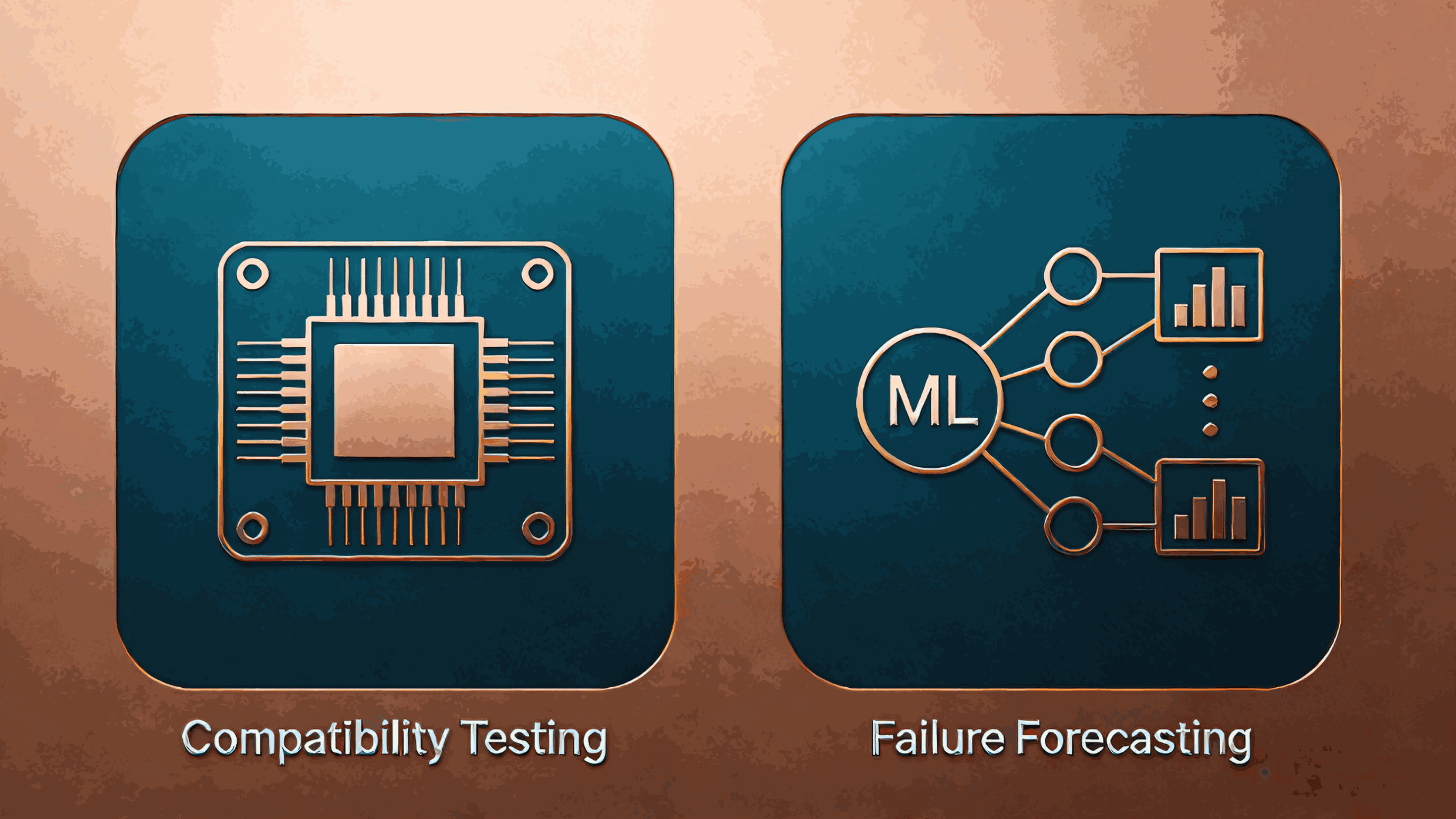
For motherboard manufacturers like us, this means analyzing real-world deployment data to predict issues such as CPU socket mismatches, RAM timing incompatibilities, or PCIe lane conflicts in multi-GPU setups. Research in IEEE publications demonstrates how ensemble ML techniques correlate correctable errors with metrics to predict uncorrectable errors weeks in advance. Similarly, deep learning models process time-series data from device attributes to isolate at-risk components proactively.
Emerging tools like AI-powered automation platforms (e.g., TestFlow for hardware validation) connect test equipment and automate sequences, reducing manual effort while enhancing precision. In server environments, ML-driven failure prediction—using algorithms like neural networks on SMART data—achieves reliable forecasts, minimizing downtime in data centers.
Automated Optimization of Configurations
Beyond prediction, generative AI and reinforcement learning enable automatic generation of optimized motherboard and server configurations. By leveraging real-world usage data from global deployments, these systems iterate through thousands of setups, balancing factors like performance, power efficiency, thermal output, and compatibility.
For instance, AI can recommend ideal BIOS settings, VRM configurations, or memory allocations tailored to workloads—drawing from anonymized production and field data. At Angxun, our robust design features (all-solid capacitors, independent CPU power supply, zero-burning protection) pair well with such optimizations. Tools from vendors like ASUS (AI Overclocking) and GIGABYTE demonstrate real-time analysis for voltage/frequency tuning, while broader AI servers from Supermicro and others optimize GPU/CPU layouts for AI workloads.
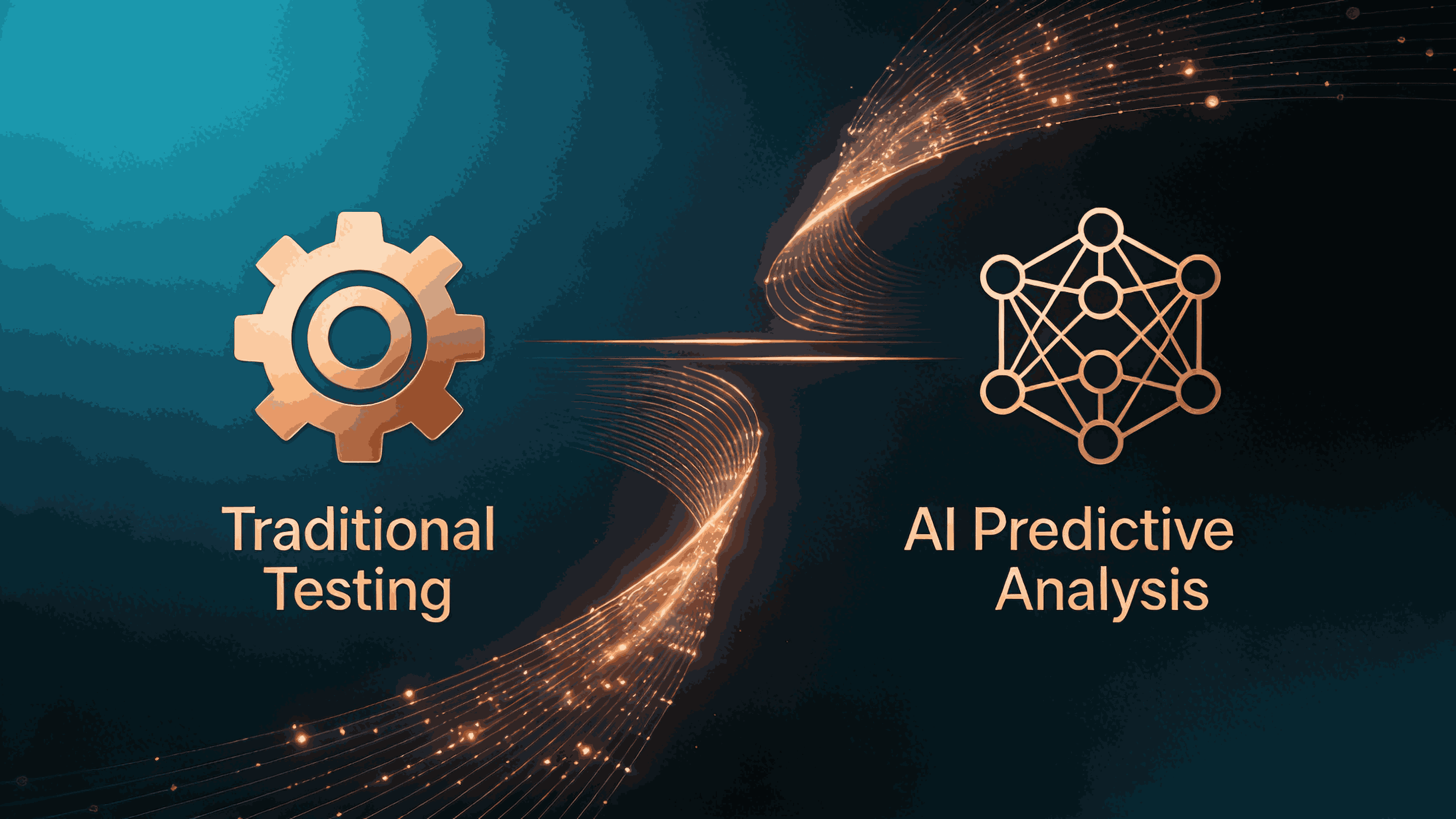
In practice, we've seen AI-driven testing reduce configuration time significantly, aligning with our ISO9001-certified processes for higher reliability and faster market delivery.
Benefits for Manufacturers and End Users
Integrating AI into compatibility testing yields faster validation cycles, lower defect rates, and cost savings. Our certifications (CE, FCC, ROHS) and advantages—24 years of OEM/ODM experience, eco-friendly materials, and guaranteed service—complement these advancements, ensuring products like our GW7, AIO, and X99 series meet demanding standards.
As AI evolves, it promises even greater precision in edge computing and industrial applications, where our industrial motherboards excel.
At Angxun Technology, we're committed to innovation in motherboard design and testing. How is AI impacting your hardware workflows? Share your thoughts below!
About the Author: Technical expert at Shenzhen Ang Xun Technology Co., Ltd., with deep experience in motherboard R&D, production, and quality assurance.