An OEM and Cloud Provider Perspective on System-Level Risk
In server engineering, few words are more misleading than “compatible.”
A component may be listed as compatible with a motherboard, CPU, or operating system — yet still fail once the system reaches mass production, continuous workload, or cloud-scale deployment.
For OEMs and cloud providers, this gap between compatibility and production stability is one of the most expensive lessons in infrastructure design.
1. Compatibility Is a Specification Claim — Production Is a Behavior Test
Compatibility usually means one thing:
But production environments demand much more:
Continuous uptime
Predictable performance under stress
Stable behavior across hundreds or thousands of identical nodes
Repeatability across batches and time
A component can be technically compatible and still be operationally unsafe.
2. Where “Compatible” Components Break Down in the Real World
2.1 Firmware and Driver Interactions Are Rarely Validated Together
Many components are validated in isolation:
SSD firmware tested with reference platforms
NIC drivers tested against limited BIOS versions
Memory validated at nominal temperature only
In production, these layers collide.
Common outcomes include:
NVMe drives dropping offline under sustained I/O
NICs flapping after firmware updates
Memory training failures after BIOS changes
These are interaction failures, not component defects.
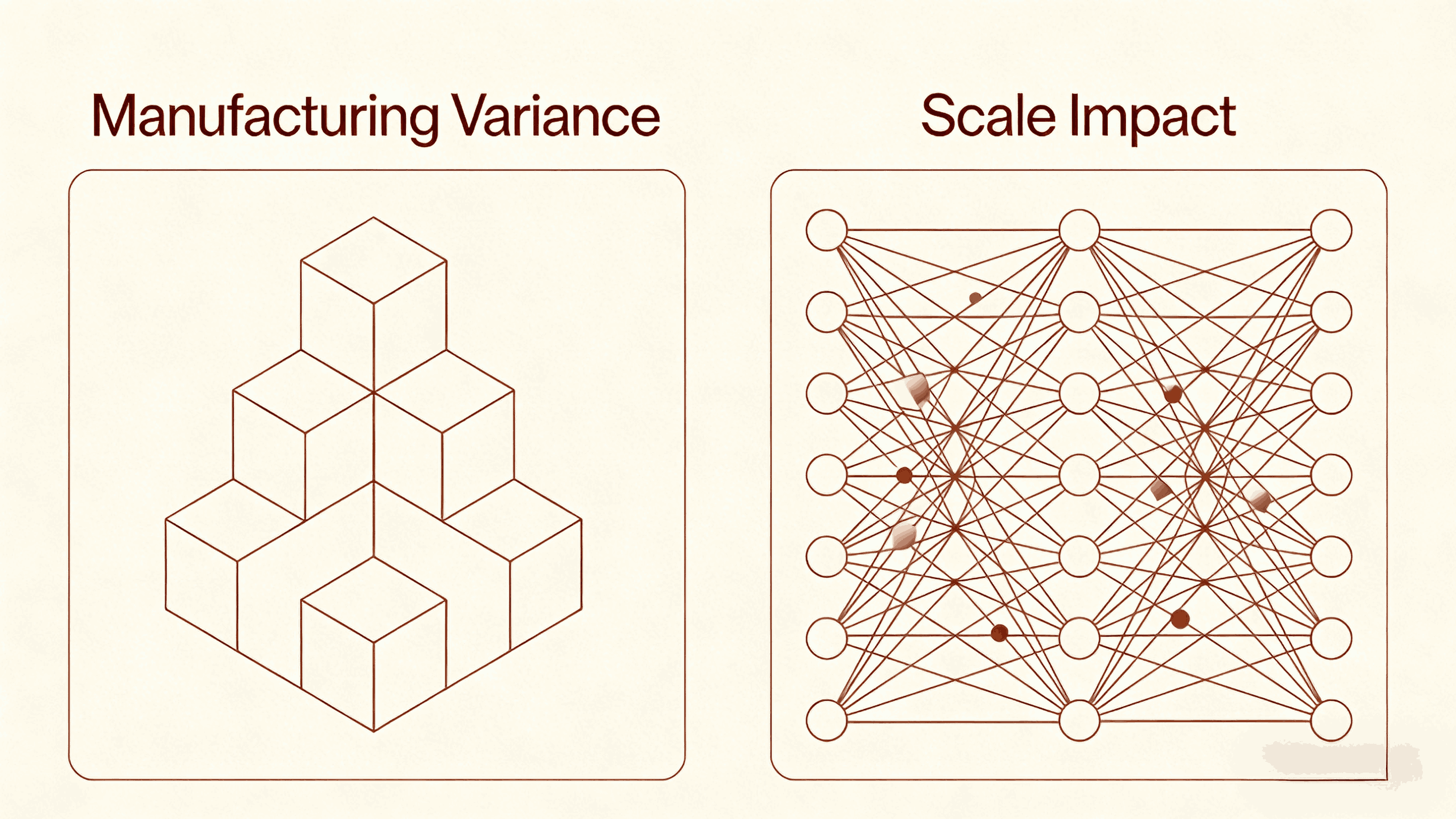
2.2 Manufacturing Variance Is Invisible During Initial Testing
Early validation often uses:
Engineering samples
Small batch quantities
At scale, variance appears:
Different memory dies under the same part number
SSD firmware revisions mid-lifecycle
Power supply behavior drifting across production lots
The result:
Systems that worked perfectly in pilot runs behave differently at scale.
2.3 Environmental Conditions Change Everything
Lab environments are controlled.
Production environments are not.
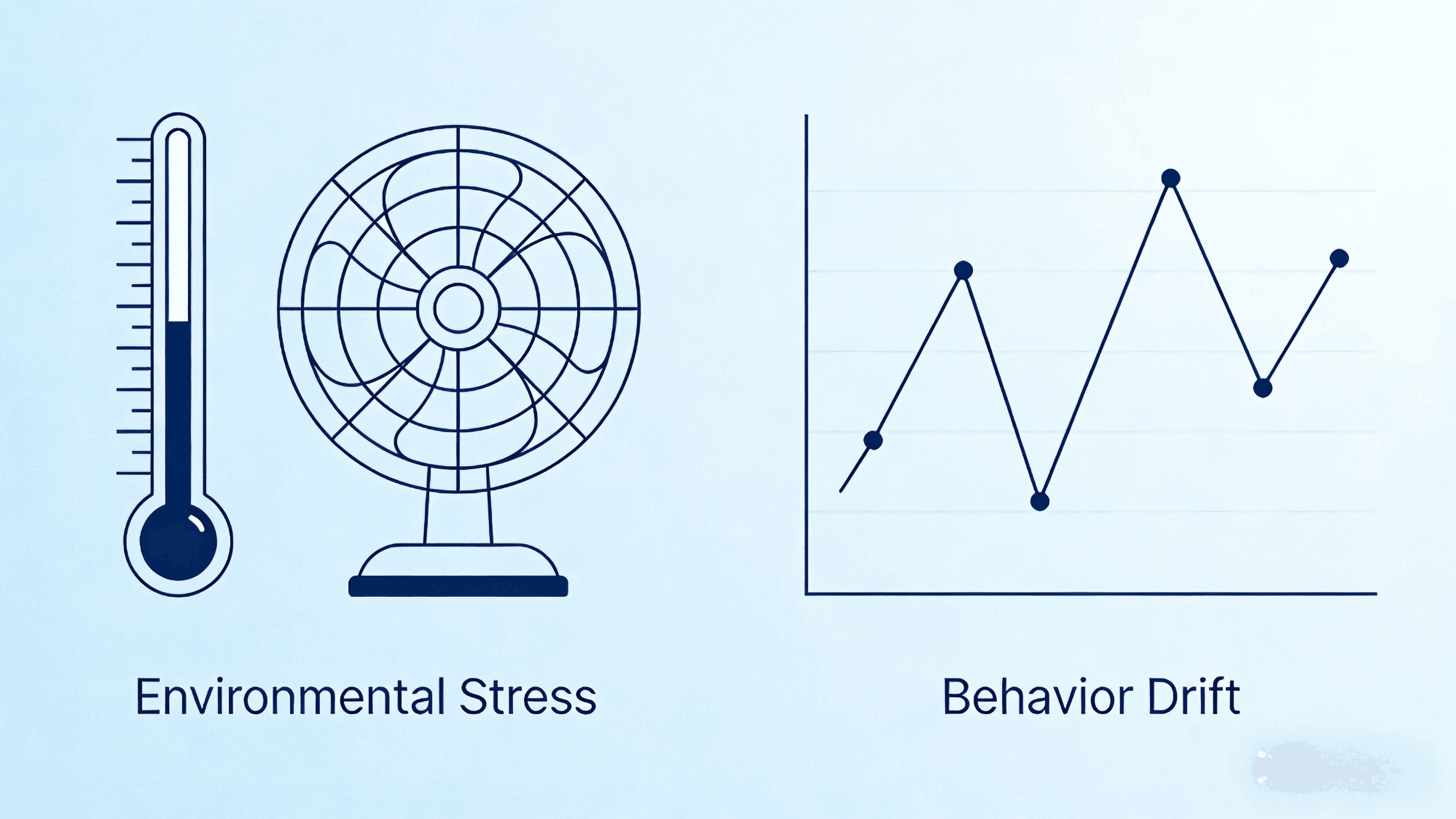
Temperature, airflow, vibration, and power quality all affect behavior.
Examples engineers see repeatedly:
SSDs stable at 25°C throttling or failing at 45°C
PCIe links dropping from Gen4 to Gen3 in dense chassis
PSUs that pass efficiency tests but fail cold-starts in the field
Compatibility does not account for environmental stress.

3. Why These Failures Hurt OEMs and Cloud Providers the Most
For OEMs:
Increased RMAs
Escalating support cost
Margin erosion
Reputation damage
For cloud providers:
The most dangerous failures are not catastrophic —
they are intermittent, non-reproducible, and inconsistent.
4. The Core Problem: Compatibility Without System Validation
The industry often assumes:
If every component is compatible, the system must be stable.
This assumption is false.
Stability emerges only when:
Components are validated together
Firmware, BIOS, and drivers are locked as a baseline
Behavior is tested under real workloads and real conditions
Batch-level consistency is verified
Without this, compatibility becomes a false sense of safety.
5. What High-Maturity Engineering Teams Do Differently
Experienced OEM and cloud engineering teams apply a different standard.
They require:
Pre-validated component combinations
Locked firmware and driver stacks
Cross-platform validation (Intel / AMD)
Environmental and stress testing
Documented failure modes and recovery paths
They optimize not for “works once,” but for:
Works the same way — every time.
6. Compatibility Is a Starting Point, Not a Guarantee
Compatibility answers:
Engineering validation answers:
In modern infrastructure, the second question is the one that protects cost, reliability, and reputation.

Conclusion
Most production failures are not caused by incompatible components —
they are caused by unvalidated interactions.
For OEMs and cloud providers, the path to reliable, scalable infrastructure is clear:
Move beyond compatibility checklists
Validate systems as complete, real-world platforms
Eliminate variables before they reach production
Because in production, predictability is worth more than compatibility.