How Hyperscale Operators Eliminate Risk Before It Reaches Production
In hyperscale environments, failure is not dramatic — it is expensive.
Cloud providers do not optimize for novelty or flexibility.
They optimize for repeatability, predictability, and risk containment.
This is why pre-validated Bills of Materials (BOMs) have become a foundational requirement across large cloud deployments.
Scale Changes the Cost of Uncertainty
At small scale, hardware experimentation is manageable.
At hyperscale, uncertainty multiplies.
A minor component difference across thousands of servers can result in:
Performance inconsistency across clusters
Increased failure rates under load
Longer validation and rollout cycles
Escalating operational and support costs
For cloud providers operating at massive scale, unvalidated variation is unacceptable risk.
What “Pre-Validated BOM” Means in a Cloud Context
A pre-validated BOM is not simply a compatibility checklist.
For cloud providers, it represents:
A frozen component set with controlled variants
Documented firmware and configuration baselines
Verified interactions between CPU, memory, storage, and networking
Known performance and power envelopes under real workloads
Validation is performed before deployment, not during production.

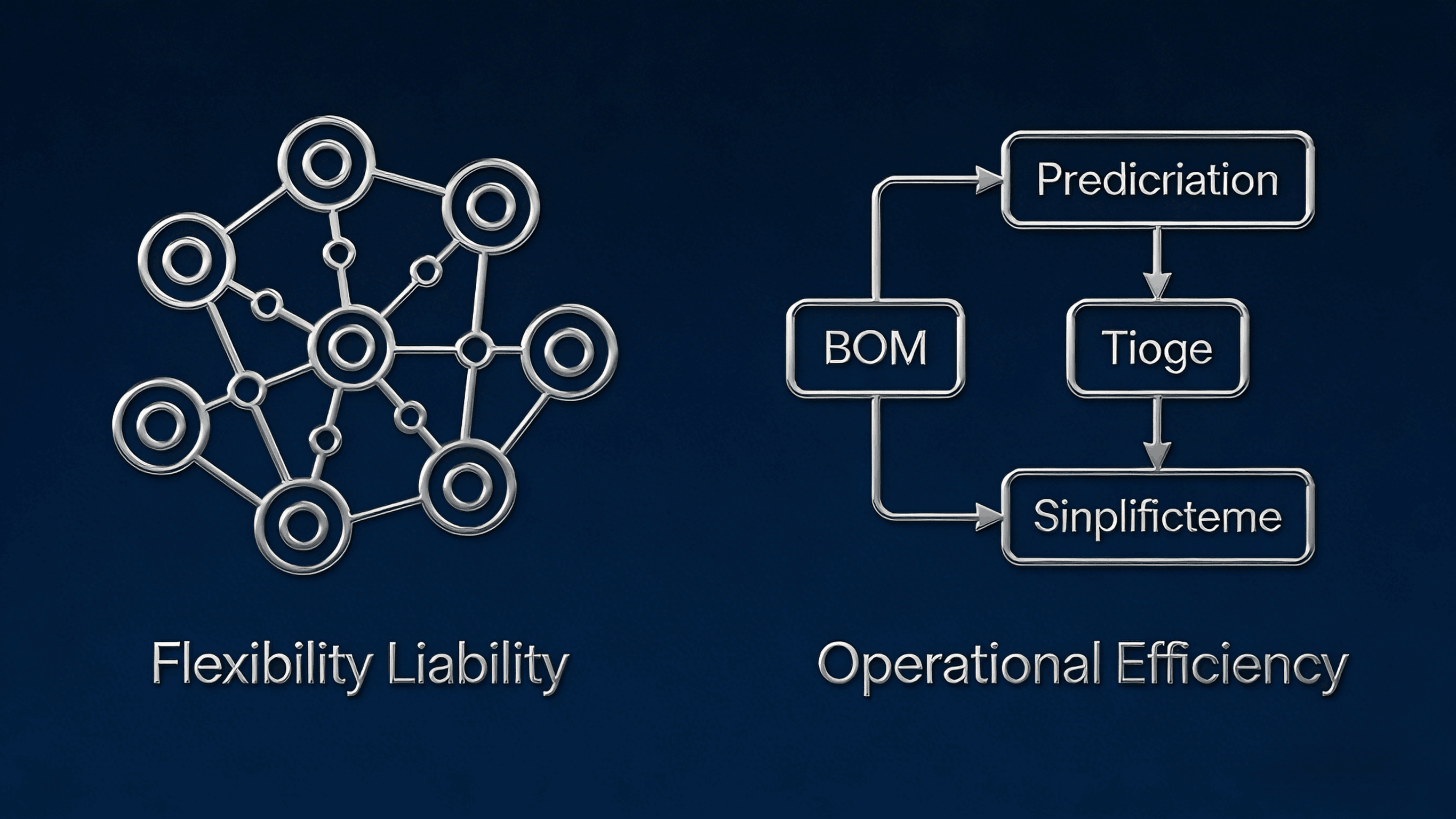
Why Flexibility Is a Liability at Hyperscale
Traditional enterprise thinking values configurable platforms.
Hyperscale operators reject that model.
Every additional option introduces:
From a cloud operator’s perspective:
Hardware flexibility increases cost without increasing reliability.
Pre-validated BOMs reduce the problem space to what is already known to work.
Operational Benefits Cloud Providers Care About
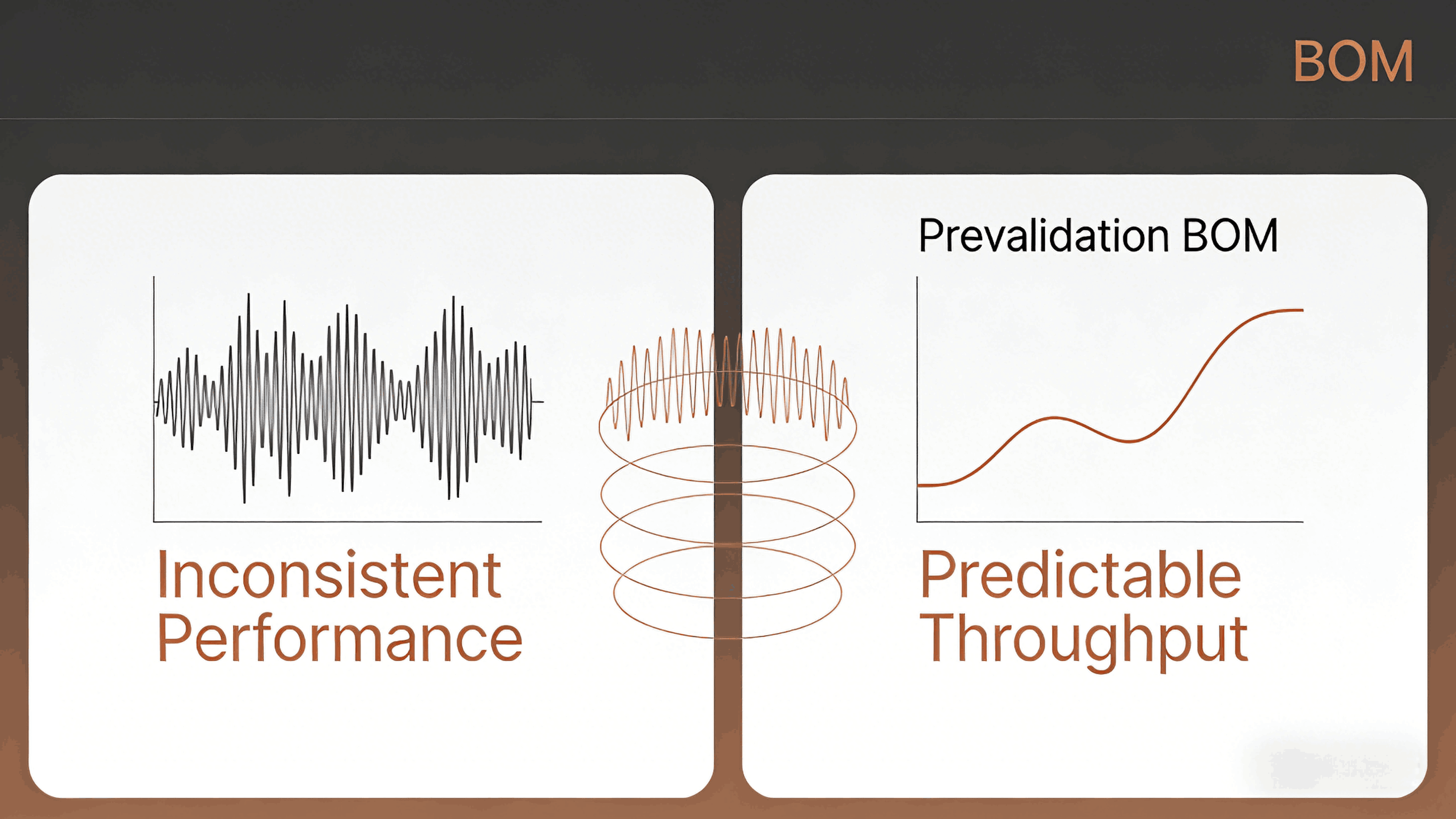
1. Predictable Performance at Scale
Schedulers, capacity planners, and SRE teams rely on uniform behavior.
Pre-validated BOMs ensure:
2. Faster Deployment and Expansion
When a BOM is pre-validated:
Speed comes from eliminating unknowns, not accelerating testing.
3. Simplified Incident Response
When systems share identical components and configurations:
Mean Time to Resolution (MTTR) drops dramatically.
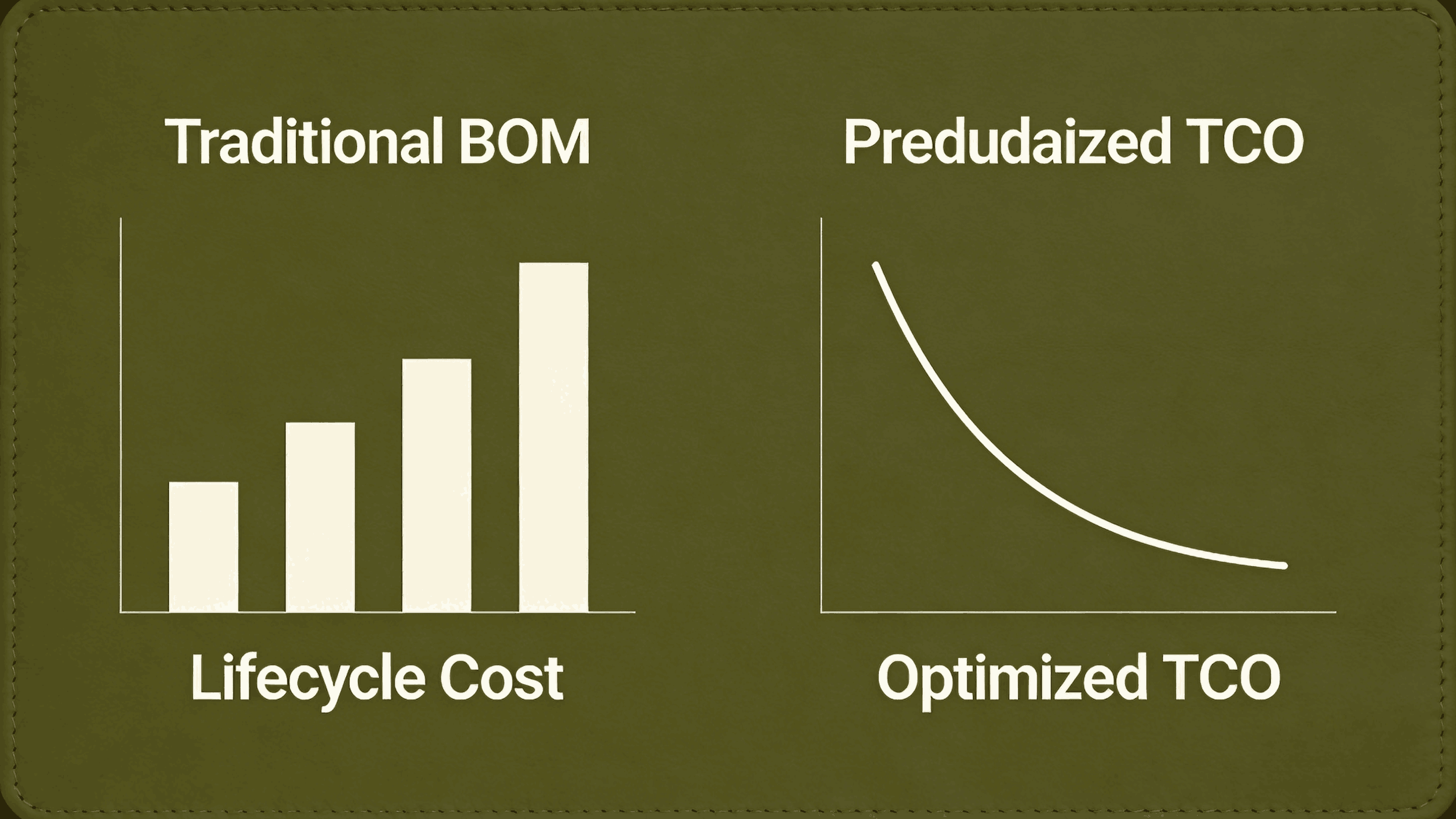
4. Lower Total Cost of Ownership (TCO)
Pre-validation reduces:
Engineering labor for debugging
QA and re-certification cycles
Operational variance and inefficiency
Cloud providers optimize not for unit cost, but for lifecycle cost.
Pre-Validated BOMs as an Architectural Control Plane
For hyperscale teams, BOMs are no longer procurement artifacts.
They function as:
Architecture constraints
Operational guardrails
Risk management tools
A pre-validated BOM defines what is allowed to exist in production.
What Cloud Providers Expect from OEM and ODM Partners
Cloud operators increasingly demand:
No silent component substitutions
Clear visibility into component revisions
Strict adherence to validated configurations
Traceability across manufacturing and deployment
Trust is built not through promises, but through process discipline.
Final Thought
Cloud providers prefer pre-validated BOMs for one simple reason:
At hyperscale, predictability is more valuable than choice.
By eliminating uncertainty before systems reach production, cloud operators protect performance, reliability, and velocity — at scale.
Pre-validated BOMs are not a limitation.
They are the foundation of reliable cloud infrastructure.