
tom@angxunmb.com
86 18933248858
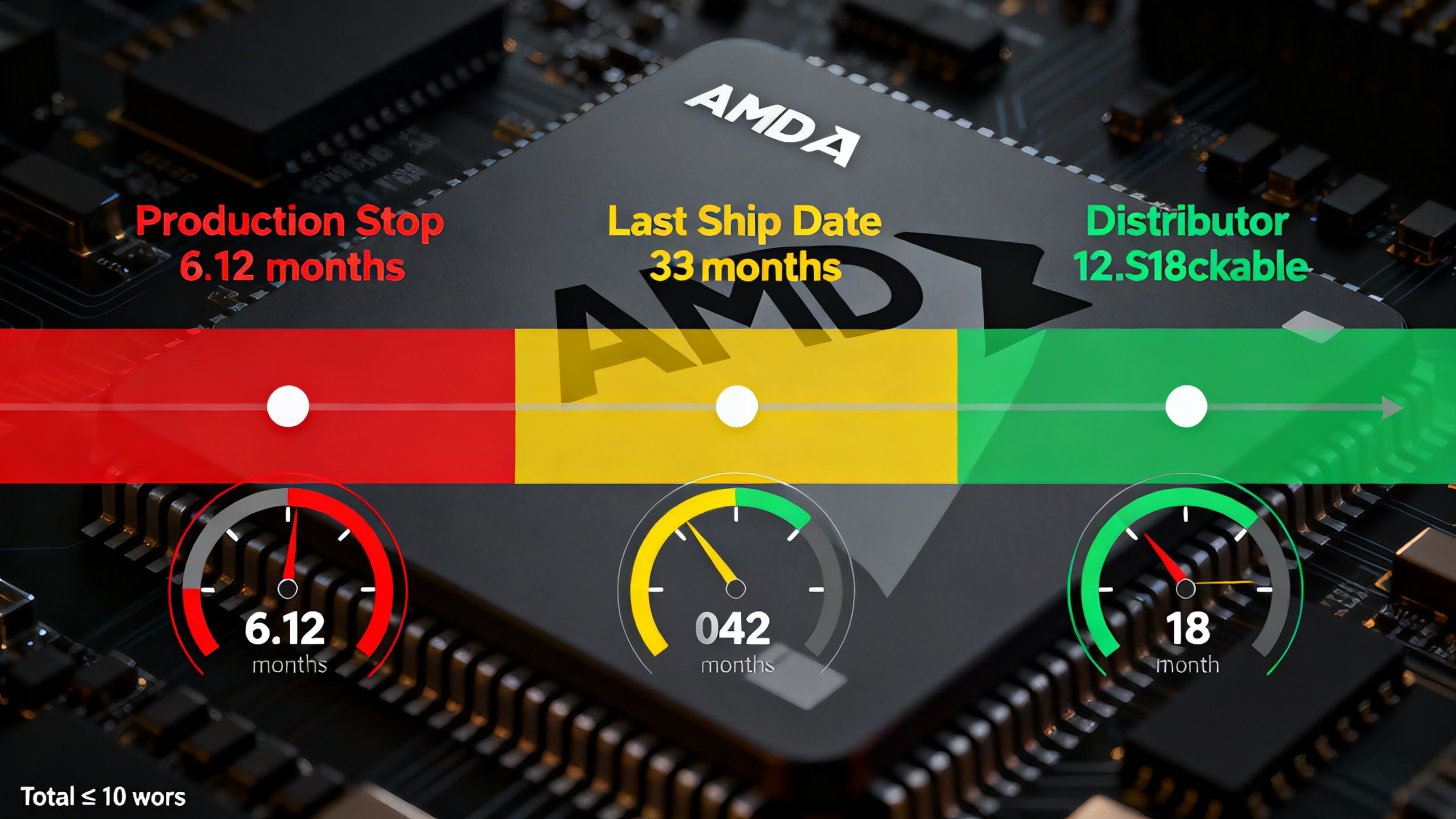
That sinking feeling when the email arrives - key component is being phased out. Here's how to survive the hardware apocalypse. We've all been there. You're managing a successful product line when the notification hits: "End-of-Life Notice for AMD B550 Chipset." Your entire product roadmap suddenly faces existential threat. As an ODM/OEM manufacturer specializing in AMD motherboards and embedded systems, we've navigated countless EOL scenarios. Here's our battle-tested playbook. Decoding the EOL Notice: What Manufacturers Aren't Telling You When AMD or Intel announces a chipset EOL, the official notice only tells part of the story. The critical details are often between the lines: Production Stop Date vs. Last Ship Date: Production typically stops 6-12 months after announcement Final shipments might continue for another 3-6 months Some distributors stockpile for 12-18 months post-EOL The Replacement Reality: "Direct replacements" often require design changes Newer chipsets may have different power requirements BIOS and driver compatibility is rarely guaranteed The 4-Phase EOL Survival Framework Phase 1: Immediate Assessment (First 48 Hours) Inventory Truth Discovery: Audit all inventory (yours, distributors, contract manufacturers) Identify work-in-progress and committed orders Calculate true runway, not just theoretical numbers Impact Analysis: Which products are affected? (desktop boards, industrial PCs, NAS systems) What's the replacement component lead time? How many customers will be affected? Phase 2: Strategic Stockpiling (Weeks 1-4) The Last-Time-Buy Calculus: We use this formula for LTB decisions: LTB Quantity = (Monthly Demand × Risk Buffer) + (Ramp-Up Stock × 1.5) Where: Monthly Demand = Average units sold monthly Risk Buffer = 3-6 months depending on replacement complexity Ramp-Up Stock = Inventory needed for new version transition Real Example: When AMD announced A320 chipset EOL, we calculated: Monthly demand: 5,000 units Risk buffer: 4 months (20,000 units) Ramp-up stock: 3,000 units × 1.5 = 4,500 units Total LTB: 24,500 units This provided 6 months of breathing room for our B450 redesign. Phase 3: Replacement Strategy (Months 1-3) The Three Paths Forward: 1. Direct Replacement (Rarely exists) Same chipset from alternative suppliers Usually requires minimal redesign 2. Successor Platform (Most common) Move to newer chipset (B550 to B650) Requires significant redesign and revalidation 3. Alternative Architecture (Nuclear option) Complete platform change Maximum effort but sometimes necessary Validation Timeline Reality: Component testing: 2-4 weeks PCB redesign: 4-8 weeks Compatibility testing: 3-6 weeks Certification: 4-12 weeks Total: 4-8 months minimum Phase 4: Customer Communication & Transition The Transparency Advantage: We immediately notify customers with: Specific EOL dates affecting their products Our mitigation plan and timeline Upgrade paths and potential cost implications Phased Transition Strategy: Continue existing product with remaining inventory Introduce replacement product alongside Provide migration guides and technical support Maintain legacy support for critical customers Real-World Case: Industrial NAS Crisis The Situation: AMD Embedded R1000 series EOL threatened our best-selling industrial NAS platform. Our Response: 1. Immediate LTB: Secured 18 months of chipset inventory 2. Parallel Development: Started R2000-based redesign immediately 3. Customer Tiering: Tier 1 (mission-critical): Guaranteed 3-year support Tier 2 (standard): Offered upgrade incentives Tier 3 (price-sensitive): Maintained with alternative solutions Result: Zero production interruptions and 85% customer retention through the transition. Proactive EOL Prevention Early Warning Systems: Component lifecycle monitoring (we track 200+ critical parts) Supplier roadmap reviews quarterly Distribution inventory trend analysis Design-For-Change Principles: Modular designs with upgradeable components Standardized form factors and interfaces Future-proof power delivery margins Your EOL Survival Checklist When the notice hits: Immediately convene cross-functional team (engineering, procurement, sales) Calculate true inventory position across supply chain Evaluate replacement options and lead times Determine strategic LTB quantity Develop customer communication plan Initiate redesign if necessary Establish transition timeline with milestones The Manufacturer's Responsibility As an ODM/OEM partner, we've learned that EOL management defines supplier quality. We now: Provide 12-month advance EOL warnings to partners Maintain alternative component qualifications Offer drop-in replacement designs for critical products Share complete lifecycle roadmaps transparently The companies that survive EOL crises aren't necessarily the biggest—they're the ones with the best contingency planning. We're an AMD motherboard ODM/OEM manufacturer helping clients navigate component lifecycles across desktop, industrial, server, and embedded platforms. Our proactive EOL management and transparent communication ensure your products survive long after components disappear. Ask about our lifecycle guarantee program.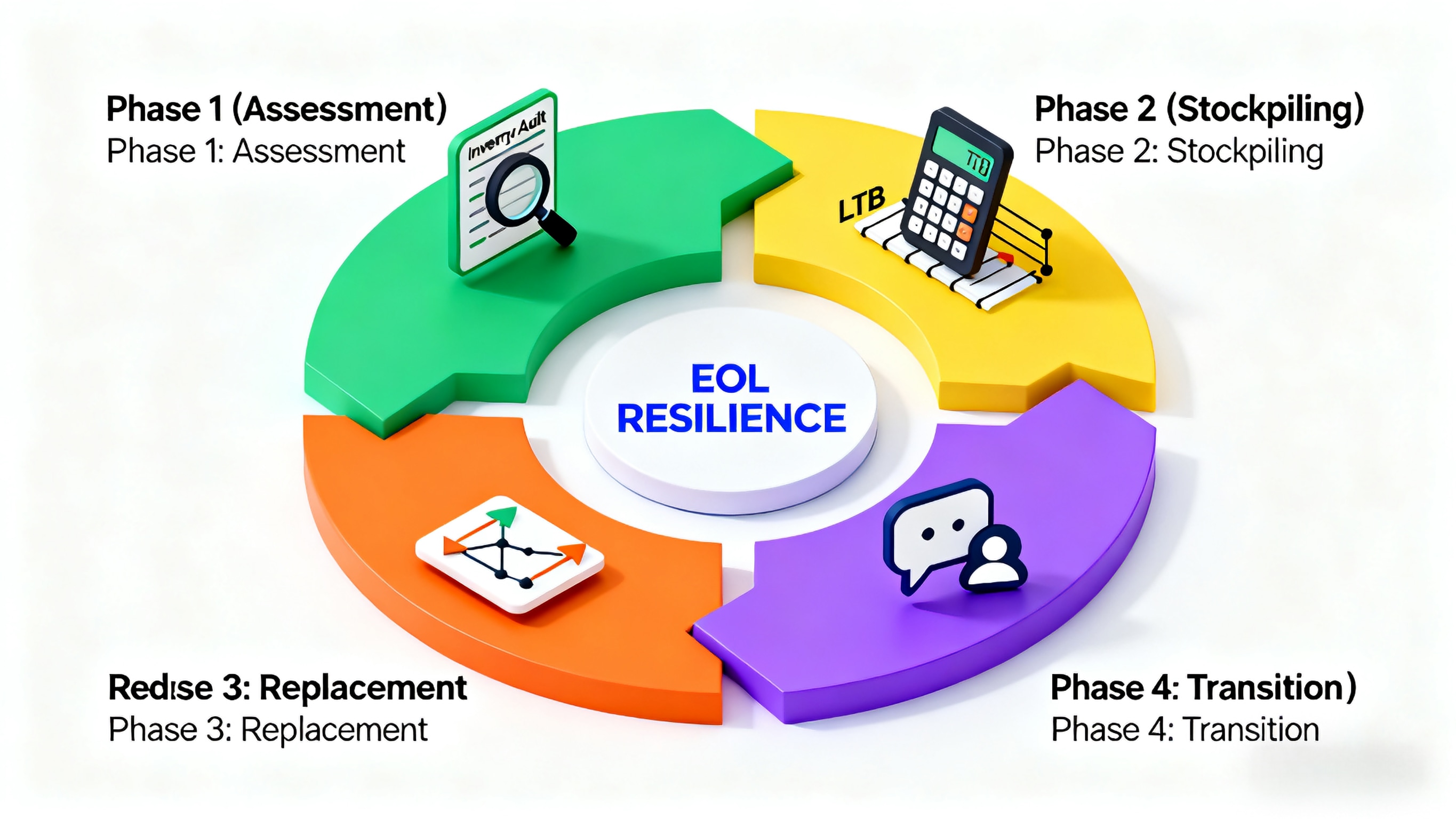
Contact: Tom
Phone: 86 18933248858
E-mail: tom@angxunmb.com
Whatsapp:86 18933248858
Add: Floor 301 401 501, Building 3, Huaguan Industrial Park,No.63, Zhangqi Road, Guixiang Community, Guanlan Street,Longhua District,Shenzhen,Guangdong,China
We chat