
tom@angxunmb.com
86 18933248858
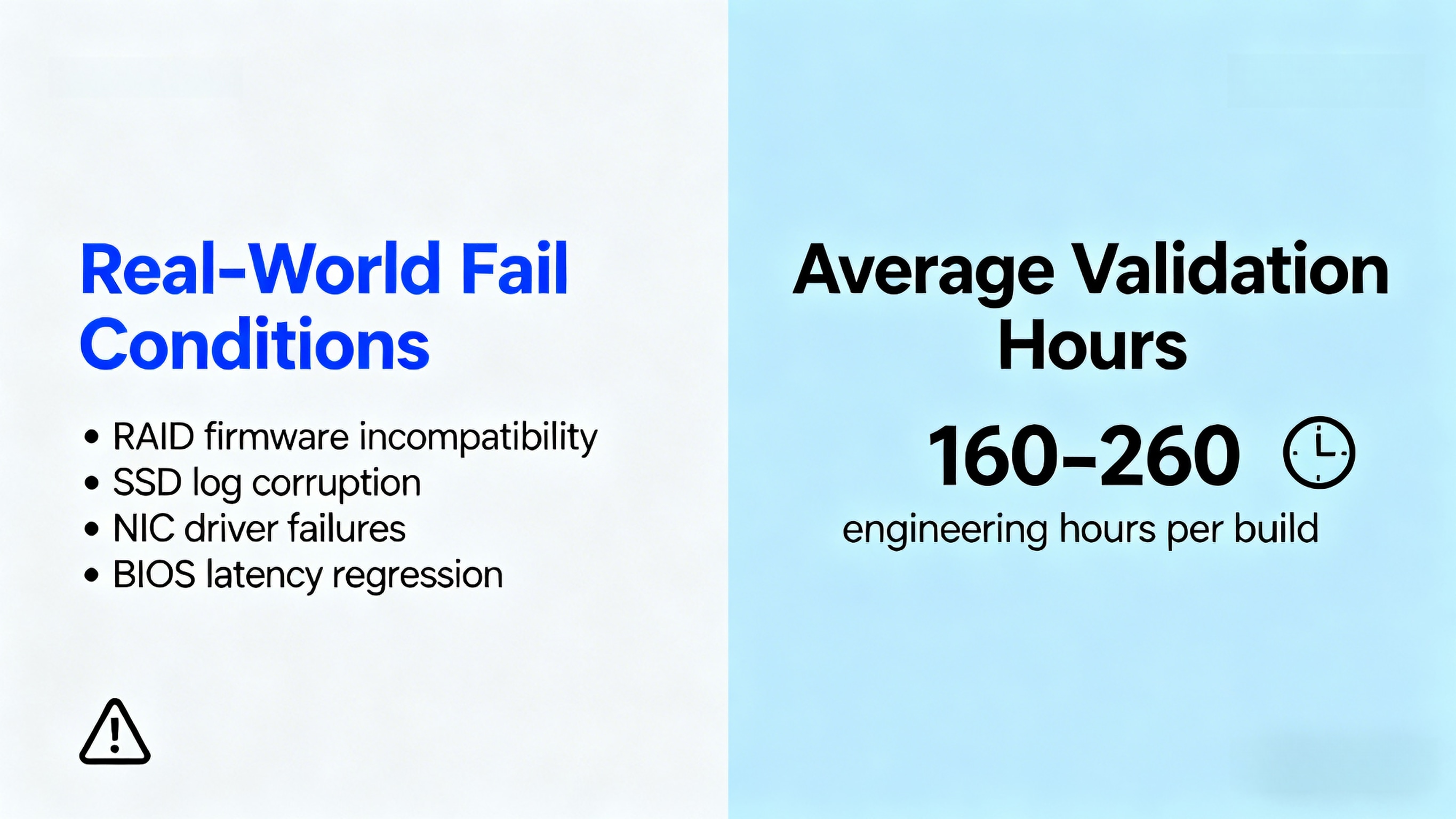
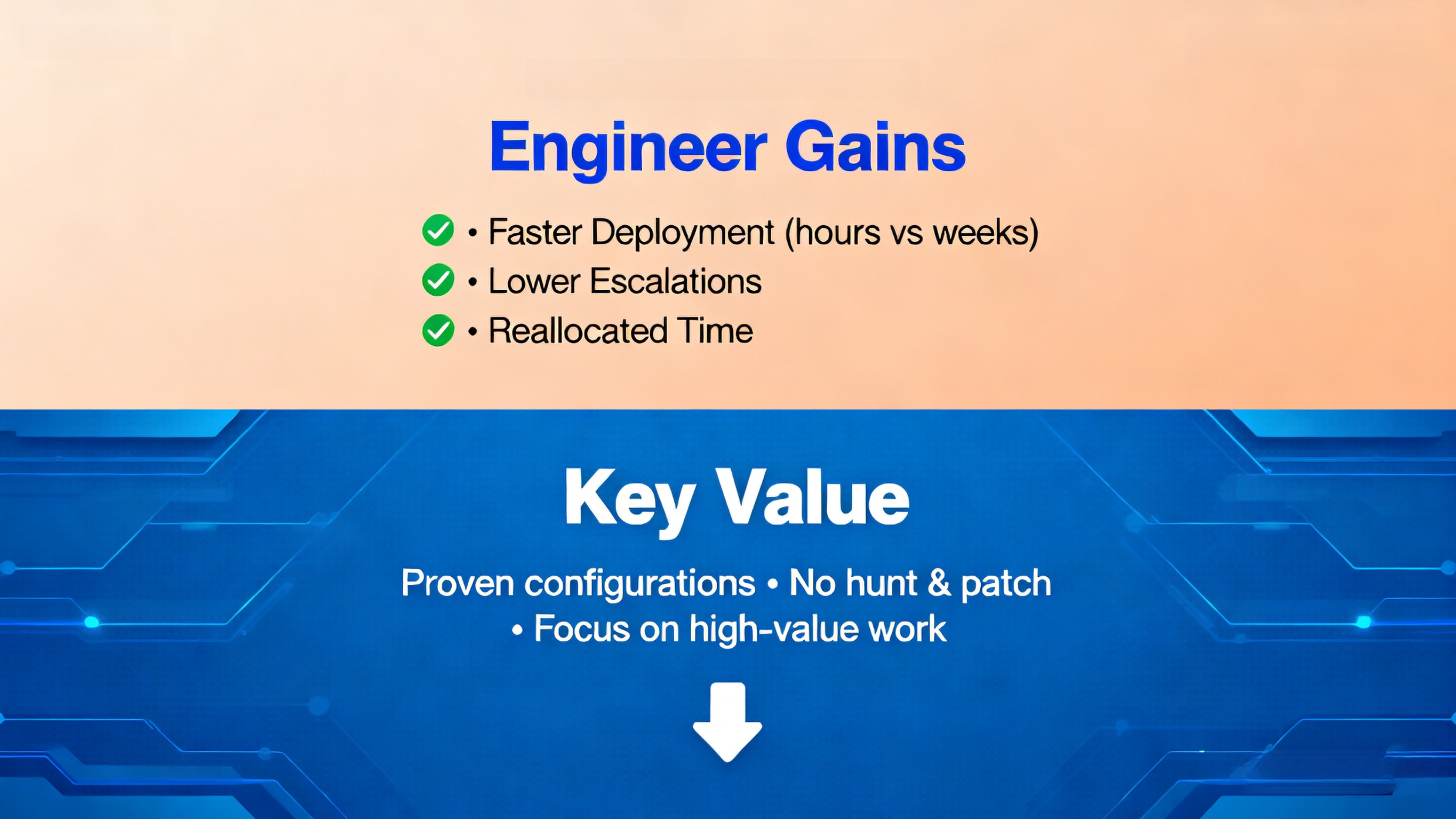
Every system engineer knows the reality: New hardware doesn’t fail in theory—it fails when you combine: A specific CPU stepping A particular memory vendor A NIC firmware build A RAID controller BIOS A different kernel or hypervisor And the spreadsheet never shows this risk. Which is why engineering teams regularly burn: 48–72 hours in stress testing Dozens of hours debugging driver dependencies Multiple reboots and lab cycles Re-testing after a firmware or microcode update Across deployments we support, the average validation workload is: 160–260 engineering hours per configuration build. Not because engineers aren’t skilled— but because modern hardware stacks are complex, evolving, and interdependent. Real-World Example Fail Conditions We See Weekly RAID firmware that works fine on Windows but fails under ESXi SSD models that pass diagnostics but corrupt logs under FIO queue depth > 32 NIC drivers that fail SR-IOV initialization under certain hypervisors BIOS updates that introduce latency regression under memory interleave modes Thermal envelopes exceeded only during sustained multi-core turbo workloads None of these show up in vendor datasheets. They only surface under: Real workload pressure Full hardware + firmware + driver + OS combinations Long-duration testing How Pre-Validated Builds Solve This Every configuration in our Pre-Validated Checklist has been pushed through a full test matrix in lab conditions: Hardware Validation CPU / memory / SSD / NIC / RAID compatibility checks Platform initialization testing Extended burn-in cycles Stress & Stability Prime95 multi-core load FIO deep queue I/O Memtest86+ Kernel & user-space monitoring 48–72 hour continuous uptime validation Thermal & Power Characterization Peak current draw VRM behavior Throttling detection Chassis airflow validation OS / Hypervisor Certification Windows Server Linux distributions ESXi Driver dependency mapping Device initialization verification If it’s on the checklist, it has already survived this process. What Engineers Gain 1.No More “Hunt & Patch” Weeks Engineers start on a platform that is already known to boot, operate, and stress cleanly. 2.Faster Deployment Cycles Systems go from unboxed to ready in hours—not weeks. 3.Lower Field Escalations Stable platforms mean: Fewer unexplained kernel errors Fewer NIC driver problems Fewer RAID initialization failures Lower RMA rate 4.Engineering Time Reallocated Instead of: BIOS logs + firmware mismatches + driver hunting teams can work on: Automation CI pipelines Load balancing System tuning Capacity planning If You’ve Ever Said: “It should work, but something isn’t right.” then you already know the value. Pre-validated builds simply ensure: Someone has done the hard work first The configuration is already proven on real workloads You don’t need to debug the same issues others have already found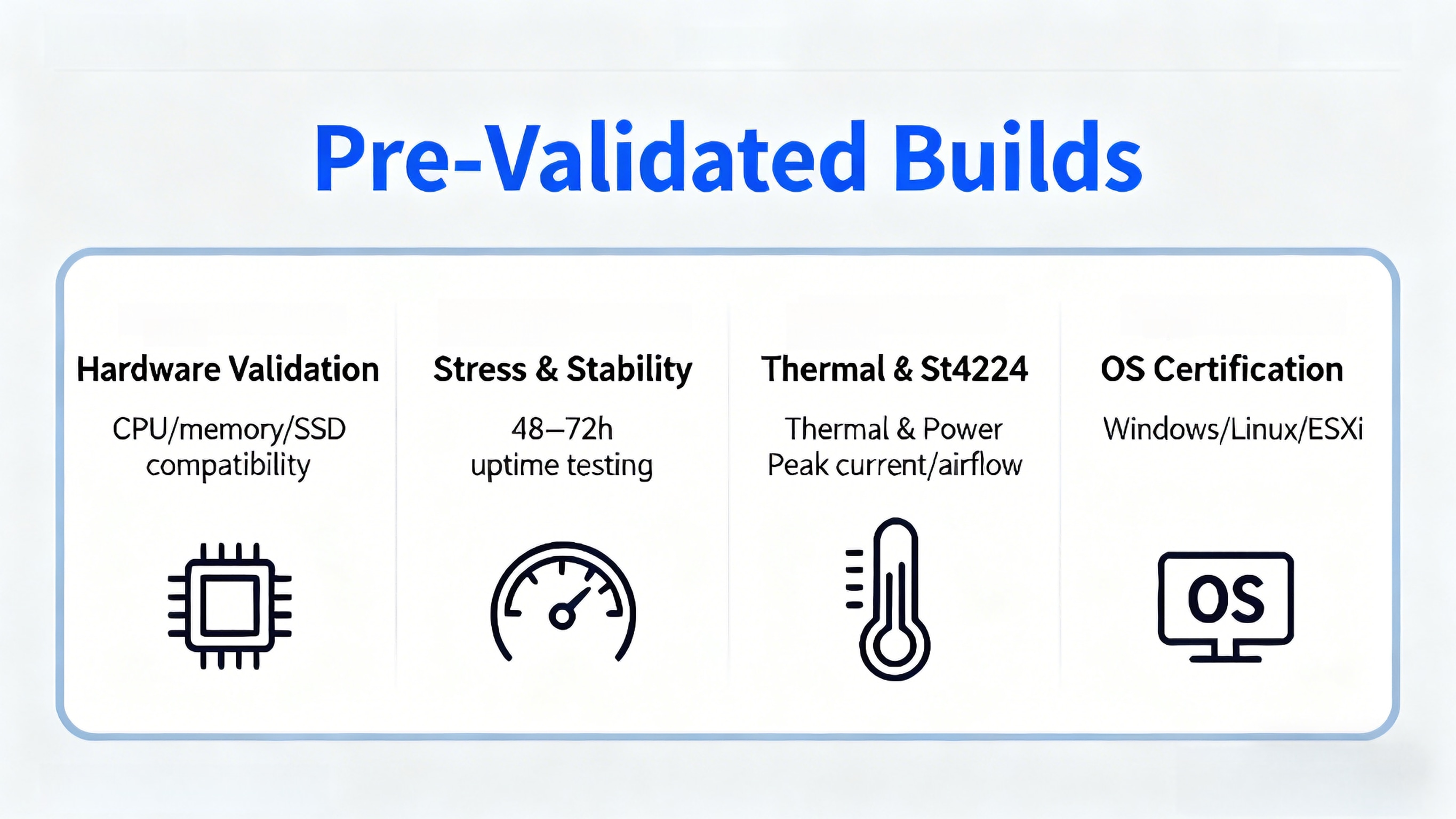
Contact: Tom
Phone: 86 18933248858
E-mail: tom@angxunmb.com
Whatsapp:86 18933248858
Add: Floor 301 401 501, Building 3, Huaguan Industrial Park,No.63, Zhangqi Road, Guixiang Community, Guanlan Street,Longhua District,Shenzhen,Guangdong,China
We chat