
tom@angxunmb.com
86 18933248858
The brutal truth about industrial computing: if your hardware can't handle extreme temperatures, it's just expensive junk waiting to fail.
We learned this lesson the hard way when a batch of "industrial" motherboards started failing in Middle Eastern oil rigs. The components met specifications, the testing seemed adequate, but reality proved merciless. Here's what years of designing AMD-based industrial motherboards, panel PCs, and embedded systems have taught us about true wide-temperature operation.
The Component Selection Minefield
Capacitors: The Thermal Weakest Link
Most hardware failures in extreme temperatures trace back to capacitors. The difference between consumer and industrial components is stark:
Electrolytic Capacitors:
Consumer grade: -20°C to +85°C (2,000-hour lifespan)
Industrial grade: -40°C to +105°C (5,000-10,000-hour lifespan)
Cost difference: 3-5x, but prevents 80% of field failures
Ceramic Capacistors:
X7R: -55°C to +125°C (solid choice)
X5R: -55°C to +85°C (avoid for wide-temperature)
C0G/NP0: -55°C to +150°C (premium, but expensive)
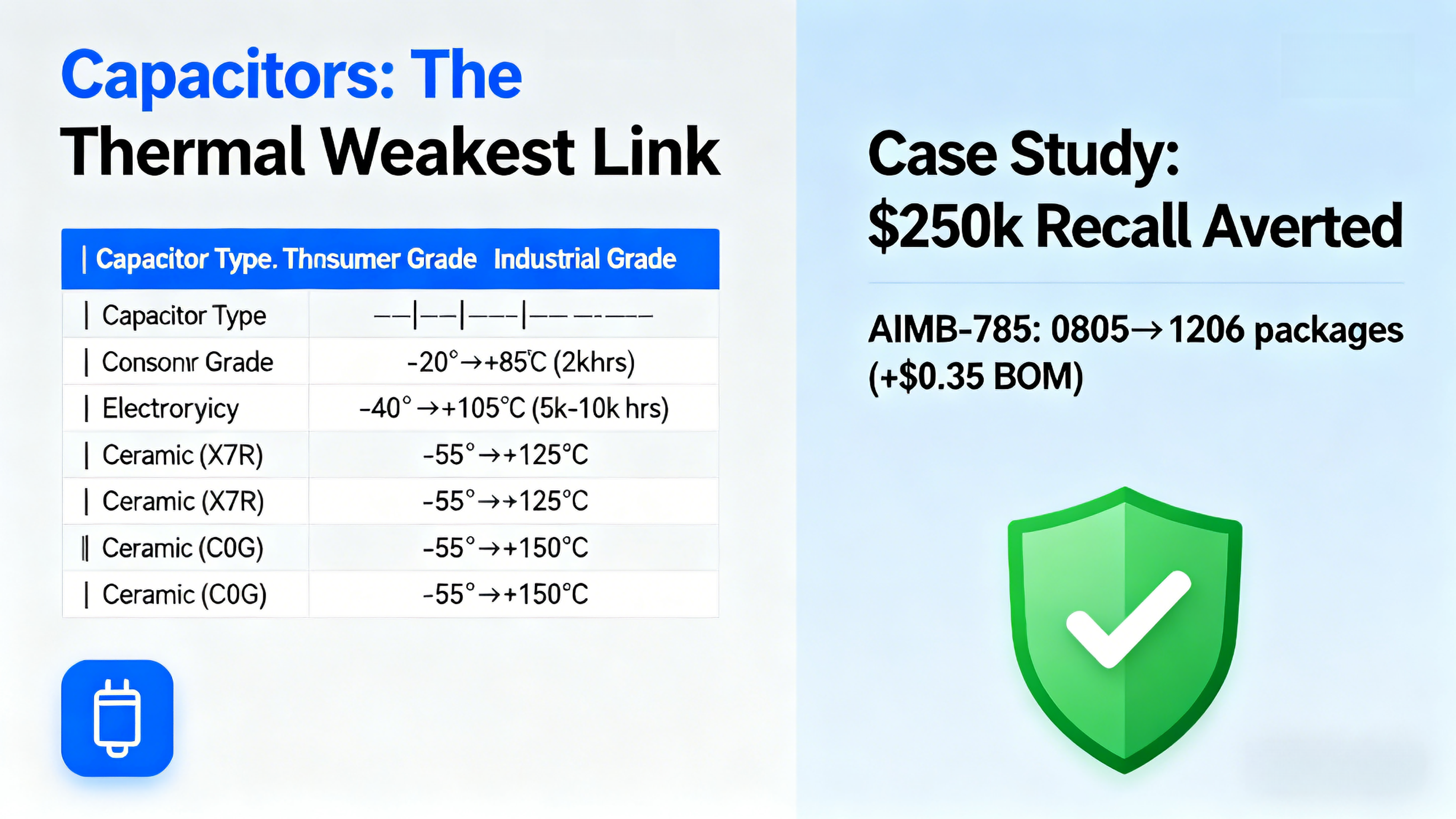
Real Case: The $250,000 Recall That Didn't Happen
We caught a capacitor issue during validation of our AIMB-785 industrial motherboard. Standard 0805 capacitors cracked during thermal shock testing between -40°C and 85°C. The fix? Switching to 1206 packages with flexible termination - adding $0.35 to BOM cost but preventing almost certain field failures.
PCB Design: More Than Just Traces
Copper Weight Matters
Standard PCBs: 1oz copper
Industrial wide-temp: 2oz copper minimum
Benefit: Better heat distribution, reduced thermal stress
Dielectric Material Selection
FR-4 Standard: Tg 130-140°C
FR-4 High Tg: Tg 170-180°C (essential for wide-temp)
Polyimide: Tg >250°C (for extreme applications)
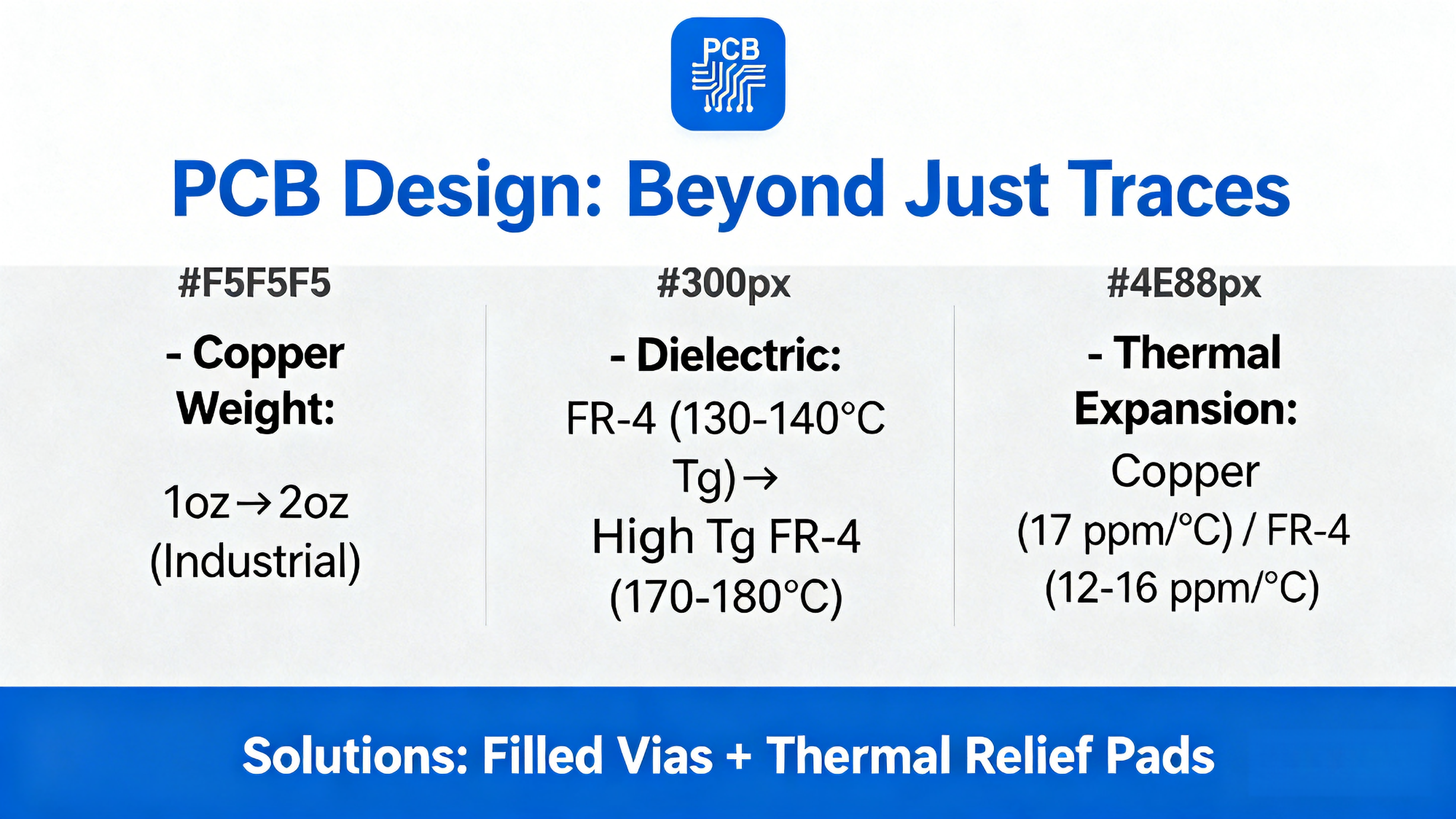
The Thermal Expansion Trap
Different materials expand at different rates:
Copper CTE: 17 ppm/°C
FR-4 CTE: 12-16 ppm/°C (in-plane)
Component CTE: 6-8 ppm/°C
This mismatch causes solder joint cracks during thermal cycling. Our solution? Using filled vias and adding thermal relief pads.
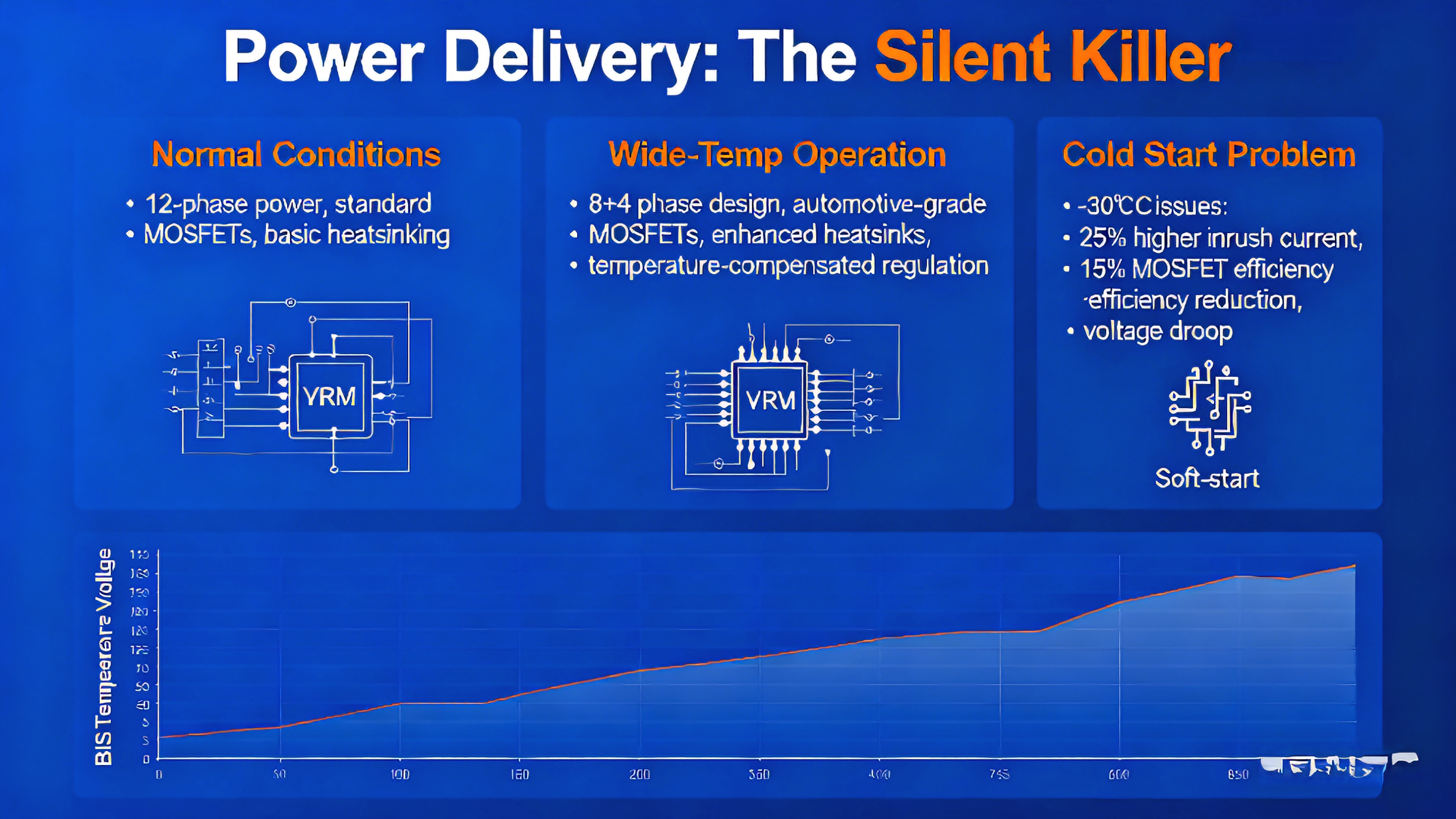
Power Delivery: The Silent Killer
VRM Design for Extreme Conditions
A typical AMD Ryzen Embedded V3000 series industrial motherboard requires:
Normal Conditions:
12-phase power design
Standard MOSFETs
Basic heatsinking
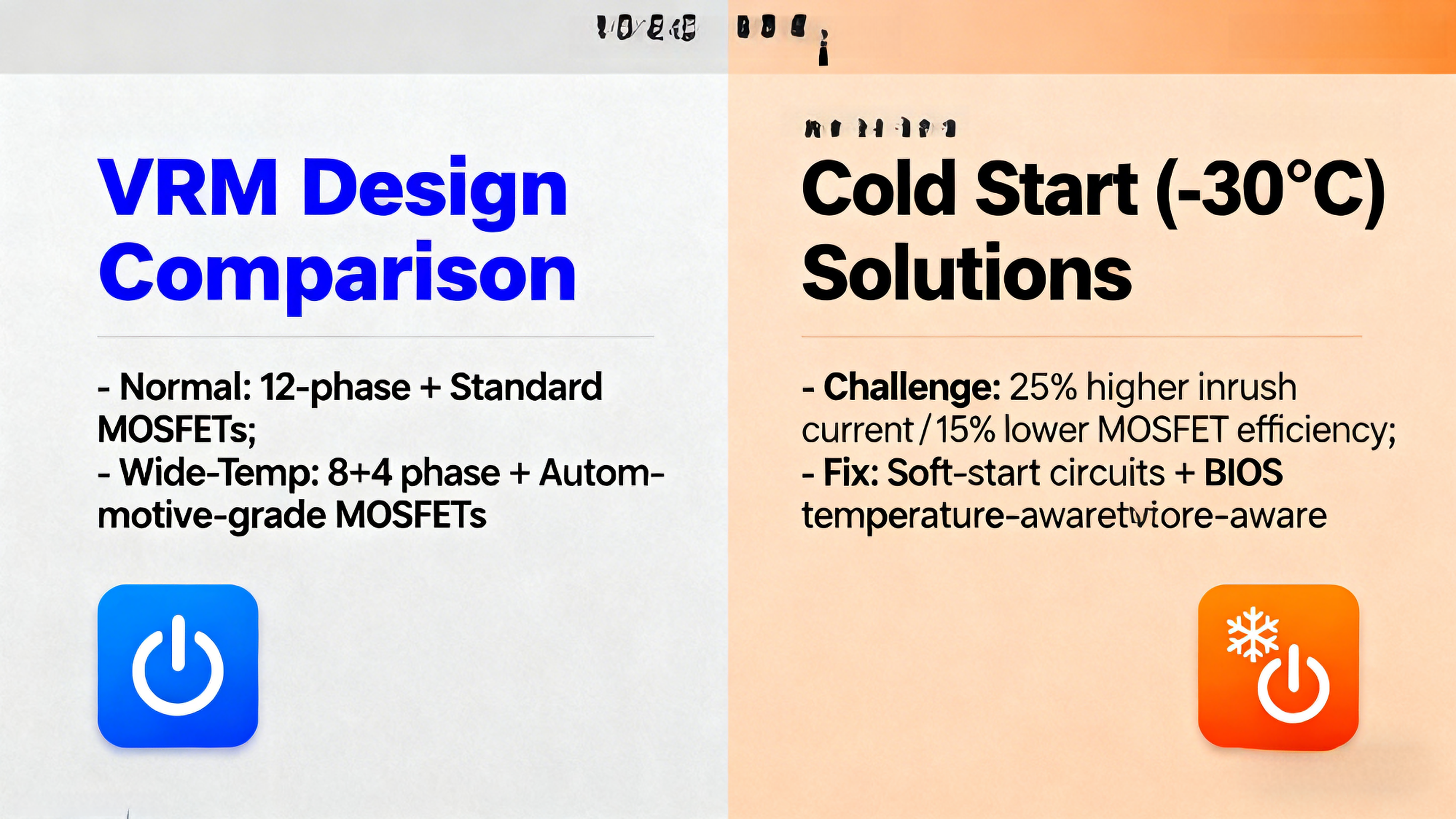
Wide-Temperature Operation:
8+4 phase design (more stable under thermal stress)
Automotive-grade MOSFETs
Enhanced heatsinks with thermal pads
Temperature-compensated voltage regulation
The Cold Start Problem
At -30°C, we observed:
25% higher inrush current
15% reduction in MOSFET efficiency
Voltage droop during initial power-on
Solution: Implementing soft-start circuits and temperature-aware voltage scaling in BIOS.
Thermal Management: Beyond Heatsinks
Active vs. Passive Cooling
Our testing revealed surprising results:
Passive Cooling (Industrial Panel PCs):
Reliable to +65°C ambient
No moving parts (higher reliability)
Limited to 15-25W TDP processors
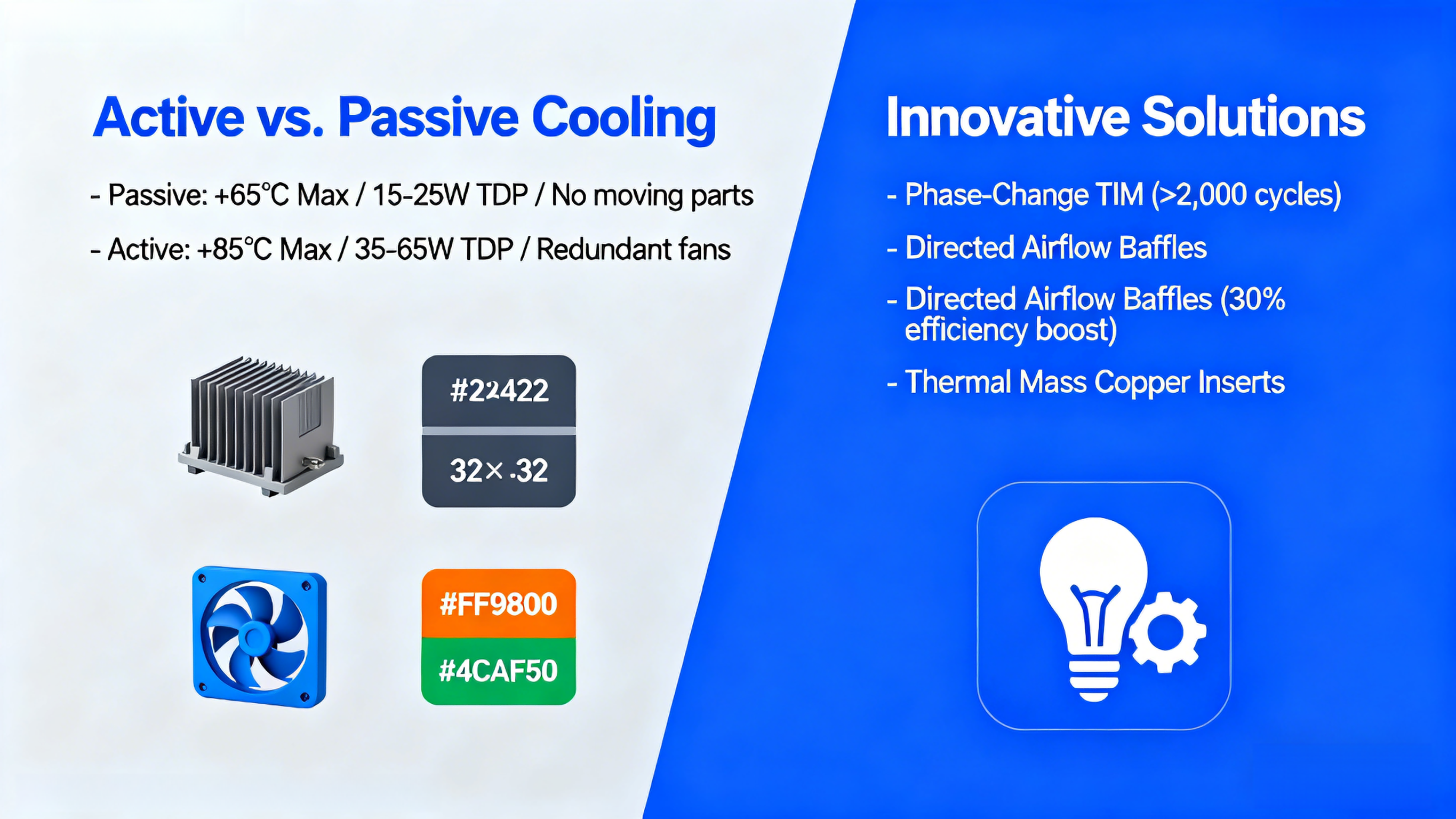
Active Cooling (Industrial Motherboards):
Reliable to +85°C ambient
Fan failure risk, but redundant designs possible
Supports 35-65W TDP processors
Innovative Solutions We've Implemented
Phase-Change Thermal Interface Materials
Standard thermal paste fails after 500 thermal cycles
Phase-change materials maintain performance beyond 2,000 cycles
Directed Airflow Baffles
30% improvement in cooling efficiency
Prevents dust accumulation
Thermal Mass Integration
Adding strategically placed copper inserts
Smoothens temperature transitions
The Validation Gauntlet
Our 5-Stage Testing Protocol
Thermal Cycling
-40°C to +85°C, 30-minute dwell times
1,000 cycles minimum (simulates 5+ years)
Monitoring for solder cracks, component drift
Temperature-Humidity-Bias
85°C/85% relative humidity
Continuous operation under load
1,000-hour duration
High-Temperature Operating Life
125°C ambient temperature
168 hours continuous operation
Accelerated lifespan testing
Thermal Shock
-40°C to +85°C in <30 seconds
500 cycles minimum
Most revealing test for material compatibility
Real-World Simulation
Desert testing: +55°C direct sunlight
Industrial freezer testing: -40°C with rapid cycling
Vibration + temperature combined stress
Case Study: Mining Operation Success
The Challenge:
AMD-based mining control systems failing in Canadian operations:
Winter temperatures: -35°C
Summer temperatures: +40°C
24/7 operation requirement
Dust and vibration present
Our Solution:
Modified AIMB-582 industrial motherboard:
Selected automotive-grade power components
Implemented 2oz copper PCB with high-Tg material
Added conformal coating for humidity protection
Used wide-temperature DDR5 modules
Implemented temperature-aware fan control
Results:
18 months continuous operation
Zero temperature-related failures
30% reduction in maintenance costs
Cost vs. Reliability: The Business Case
Standard Industrial Motherboard:
Component cost: $85-120
Operating range: 0°C to 60°C
Expected lifespan: 3-5 years
Failure rate: 3-5% annually in harsh environments
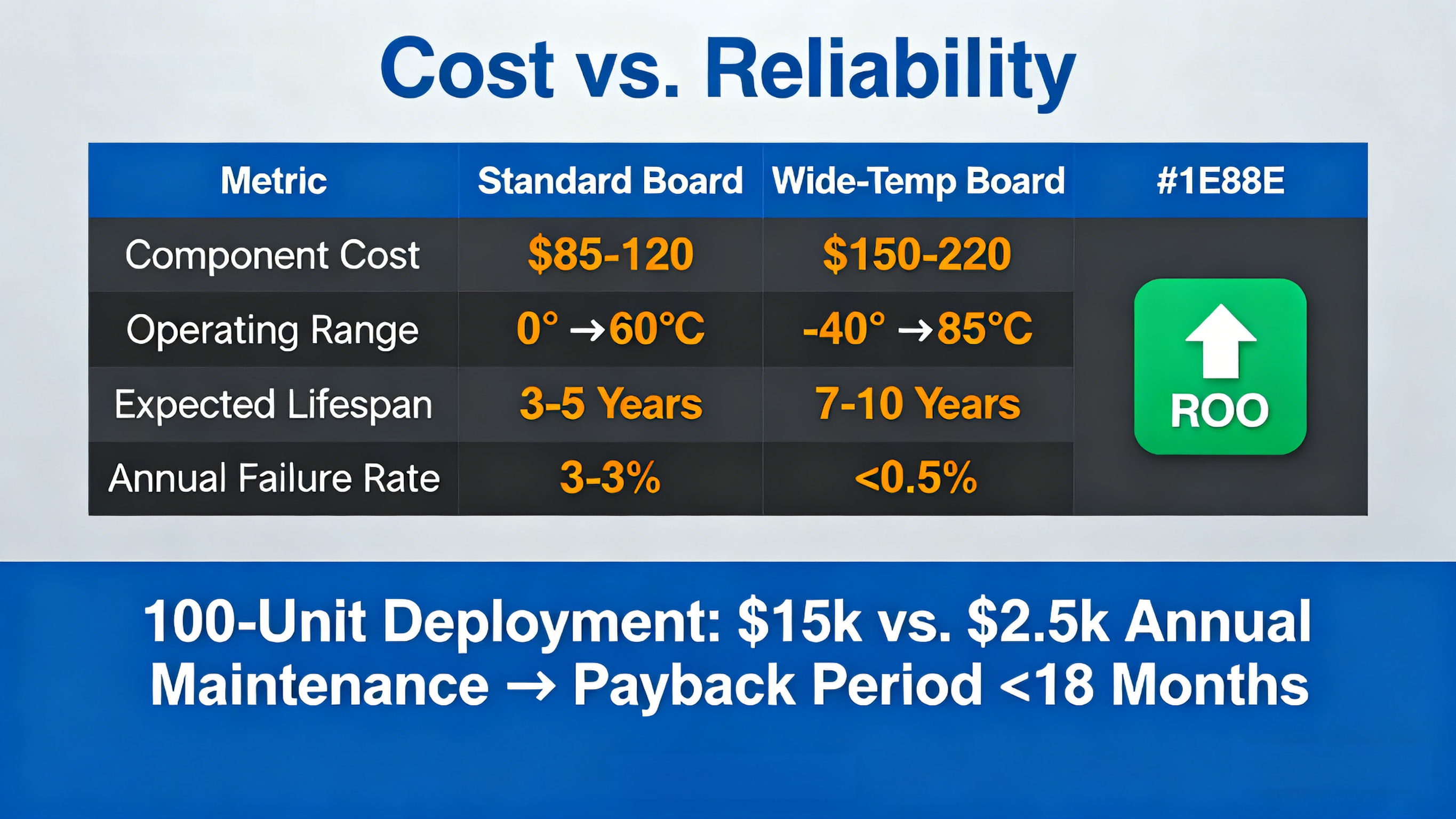
Wide-Temperature Industrial Motherboard:
Component cost: $150-220
Operating range: -40°C to 85°C
Expected lifespan: 7-10 years
Failure rate: <0.5% annually in harsh environments
ROI Calculation:
For a 100-unit deployment in harsh environment:
Standard boards: $15,000 annual maintenance
Wide-temp boards: $2,500 annual maintenance
Payback period: <18 months
Implementation Guide
For System Integrators:
Verify, Don't Trust
Demand test reports, not just specifications
Require validation data for your specific temperature range
Audit supplier testing facilities
Consider the Total Environment
Solar loading can add 20°C to ambient temperatures
Enclosure design affects internal temperatures
Airflow restrictions impact cooling efficiency
Plan for Real-World Conditions
Test in actual deployment environments
Monitor early deployments closely
Maintain spares strategically
The Bottom Line
Wide-temperature design isn't about adding a few industrial components. It's a holistic approach that considers:
Component selection based on actual performance, not just datasheets
PCB design optimized for thermal stress management
Power delivery designed for extreme condition stability
Rigorous validation that simulates real-world conditions
The companies that get this right aren't just selling hardware—they're delivering reliability that becomes the foundation of their customers' operations.
We design and manufacture AMD-based industrial computing solutions that survive where others fail. Our industrial motherboards, panel PCs, and embedded systems are proven in applications from desert mining to arctic research. Contact us to discuss your extreme environment computing requirements.
Contact: Tom
Phone: 86 18933248858
E-mail: tom@angxunmb.com
Whatsapp:86 18933248858
Add: Floor 301 401 501, Building 3, Huaguan Industrial Park,No.63, Zhangqi Road, Guixiang Community, Guanlan Street,Longhua District,Shenzhen,Guangdong,China
We chat