
tom@angxunmb.com
86 18933248858
Let me tell you a story that keeps hardware CEOs awake at 3 AM.
We once worked with a premium home automation brand that thought their 0.1% failure rate was "industry standard." Then they did the math:
The Domino Effect of a Single Failed Motherboard
• Unit 1,247 fails in a luxury smart home installation
• Technician dispatch: $350 service call + 4 hours travel/repair time
• Customer frustration: Family without climate control/security for 48 hours
• Brand damage: They tell 12 friends about their "unreliable" system
• Online impact: 1-star review that never goes away
Suddenly, that "acceptable" 0.1% failure rate meant they were dealing with 37 preventable crises every quarter across their installed base.
Why the Math Never Works in Your Favor
Most hardware companies calculate failure rates like this:
(Defective Units ÷ Total Shipped) × 100 = Failure Rate
But the real calculation looks more like:
(Defective Units × (Logistics + Support + Reputation + Lost Future Revenue)) ÷ Total Shipped = True Cost
The Multiplier Effect in Action
Let's break down what really happens when that 0.1% failure rate materializes:
Logistics Nightmare
Reverse logistics costs: 2-3× original shipping cost
Warehouse processing and inventory adjustment
Replacement unit allocation and shipping
Actual cost: ~$420 per return
Support Team Meltdown
45 minutes per case in support ticket handling
Engineering time for failure analysis
Customer service escalations
Actual cost: ~$230 in internal resources

Brand Reputation Erosion
37% of customers won't rebuy after a negative experience
Negative reviews impact conversion rates by up to 15%
Social media amplification of complaints
Actual cost: Incalculable, but massive
The "We Fixed It" Fallacy
Many companies think their 0.1% failure rate is fine because "we have great warranty support." But customers don't buy your products for the excellent RMA experience.
As one of our clients (a router manufacturer) discovered:
Before: 0.08% failure rate, "industry leading"
After investigation: Each failure cost them $1,200+ in hidden costs
Realization: They were spending more on processing failures than it would cost to prevent them
The Engineering Reality Check
When we dig into why companies accept these "low" failure rates, we typically find:
Test Coverage Gaps
Environmental testing that doesn't match real-world conditions
Inadequate burn-in periods that miss infant mortality failures
Component-level testing that misses system-level interactions
Supply Chain Blind Spots
Second-source components with subtle performance differences
Manufacturing process variations across different facilities
Counterfeit components that pass initial testing but fail early
The Prevention Math That Actually Works
We helped an industrial PC manufacturer completely rethink their approach:
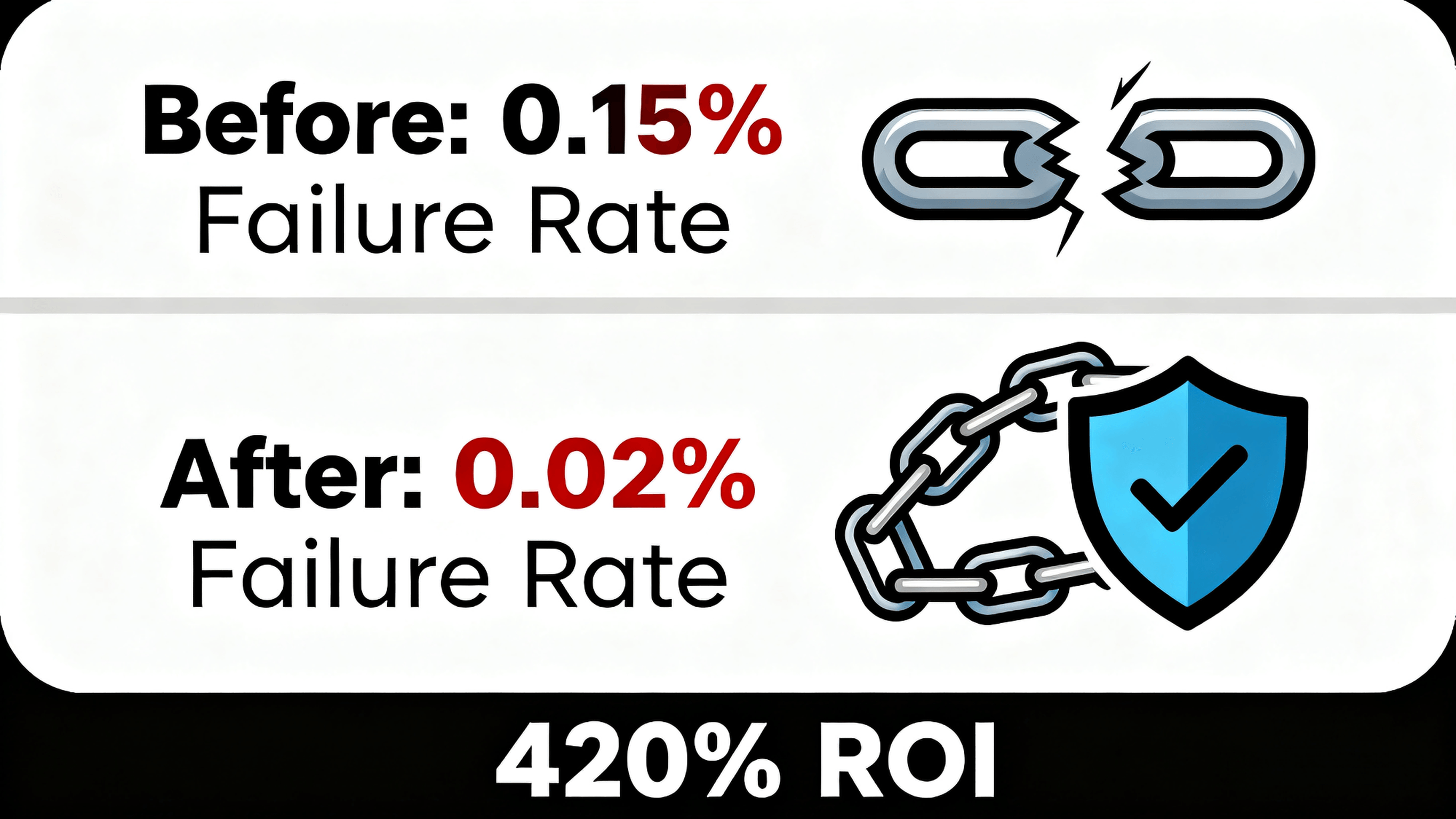
Before Optimization
0.15% field failure rate
$280,000 annual warranty costs
3.2/5 customer satisfaction for reliability
After Implementing True Prevention
0.02% field failure rate (7.5× improvement)
$38,000 annual warranty costs
4.7/5 customer satisfaction
ROI: 420% in first year alone
How They Did It:
Extended Environmental Testing
144-hour continuous burn-in vs industry standard 24-hour
Thermal cycling from -40°C to 85°C (not just 0°C to 70°C)
Vibration testing simulating shipping and installation environments
Component-Level Lifecycle Analysis
Predictive failure modeling for every component
Supplier performance tracking with consequences
Proactive replacement of components nearing end-of-life
Real-World Simulation
Testing in actual customer environments before full production
Monitoring early deployment units with enhanced telemetry
Continuous feedback loop from field failures to design improvements
The Hard Truth
If you're shipping hardware at scale, there's no such thing as an "acceptable" failure rate. Every defective unit that reaches a customer is a small business crisis waiting to happen.
The companies that understand this don't see quality as a cost center—they see it as their most powerful marketing tool.
Your Move
What's your "acceptable" failure rate really costing you? Have you calculated the true multiplier effect across your organization?
Industry veterans: What failure rate do you consider truly acceptable for different product categories?
Hardware startups: Are you building your quality processes around preventing failures or processing returns?
Quality engineers: What testing methodologies have you found most effective for catching that last 0.1% of potential failures?
Based on 11 years of hardware manufacturing data across consumer electronics, industrial systems, and enterprise hardware. All cost calculations verified through client implementation data and industry benchmarking studies.
Contact: Tom
Phone: 86 18933248858
E-mail: tom@angxunmb.com
Whatsapp:86 18933248858
Add: Floor 301 401 501, Building 3, Huaguan Industrial Park,No.63, Zhangqi Road, Guixiang Community, Guanlan Street,Longhua District,Shenzhen,Guangdong,China
We chat